

High Temperature Filters
HEPA Filters
These filters are constructed with 304 stainless steel frame. The high temp media is completely pleated over corrugated aluminium separators to maintain pack stability. The interlock design of frame with silicon sealant in the top and bottom to assure leak free performance throughout the life of the filter.
The high temperature filters are constructed with a 304 stainless steel frame. The high-temp media is completely pleated over corrugated aluminium separators to maintain pack stability. The interlock design of the frame with silicone sealant in the top and bottom to assure leak free performance throughout the life of the filter.
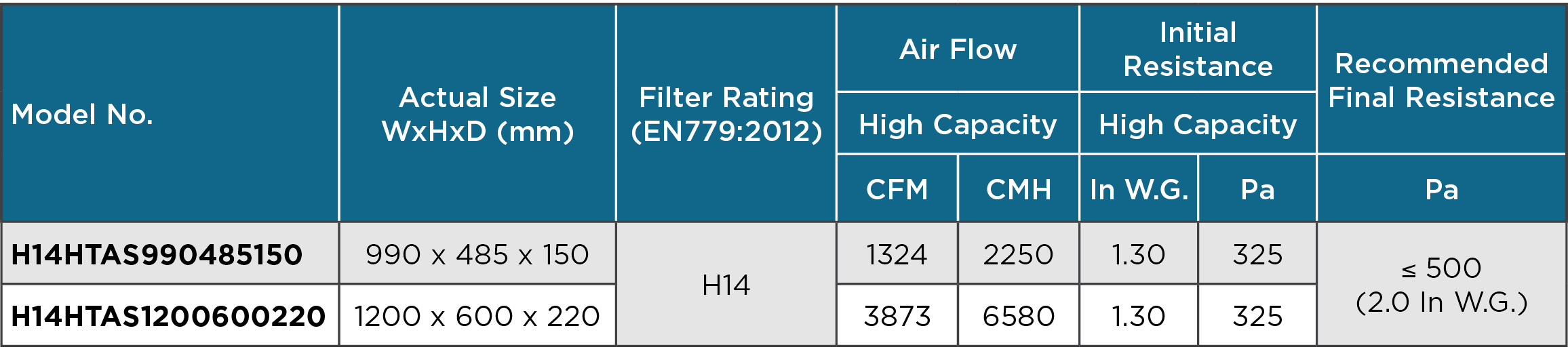
Specifications

Advantages
Control airflow under high humidity
Hammed edges eliminate possible pleat damage
Extend life span with low initial resistance
Comply with UL900 grade flame retardant
Applications
Available for being applied in the pharmaceutical industry, food processing industry, hospitals, and aerospace.
Product Highlights
Made for extreme heat HVAC environments
Durable high-temperature air filter construction
Reliable HEPA filter high temperature performance
Maintains filtration efficiency under thermal stress
Suitable for manufacturing applications
Advanced high temp HEPA filter technology
Compatible with specialised HVAC systems
Delivering Consistent Performance In Demanding Conditions
A high-temperature HEPA filter is designed for environments where standard filtration systems fail under extreme heat exposure. These filters are engineered using heat-resistant materials that maintain structural integrity and filtration efficiency under high operating temperatures.
Our high temperature air filter range is commonly used in HVAC systems, manufacturing facilities, ovens, and controlled processing environments where thermal stability is essential.
The HEPA filter high temperature range provides advanced particulate filtration while ensuring durability in continuous high-heat operations. These filters are critical in environments requiring both air purity and thermal resistance.
Who Is This For?
Our high-temperature HEPA filters are ideal for:
Industrial manufacturing plants
High-heat processing facilities
Commercial ovens and baking systems
Pharmaceutical production environments
Engineering and fabrication facilities
These high-temperature air filter systems are specifically designed for environments where heat and air quality control must operate together reliably.
FAQS
-
Yes, a high-temperature air filter can be used in specialised HVAC systems designed to handle elevated heat conditions. However, they are not typically required for standard residential or low-temperature commercial HVAC systems.
-
If a standard filter is used instead of a high-temperature HEPA filter, it may degrade, warp, or fail under heat stress. This can lead to reduced airflow, system inefficiency, and potential contamination risks. In some cases, it can also damage HVAC equipment.
-
Yes, a high temp HEPA filter requires regular inspection as part of a scheduled maintenance program. Because these filters operate in harsh conditions, they should be checked for airflow restriction, structural integrity, and contamination buildup.
-
Yes, properly maintained high temperature HEPA filters can improve HVAC energy efficiency by ensuring smooth airflow and reducing system strain. When filters become clogged or degraded, systems must work harder, increasing energy consumption. Using a correctly rated air filter helps maintain stable airflow and reduces unnecessary energy load.
Product Care & Maintenance
The high-temperature air filter should be replaced according to system operating cycles and manufacturer recommendations. Over time, high thermal loads can reduce filtration efficiency, making timely replacement critical.
For industrial systems, the HEPA filter's high-temperature range should be included in scheduled HVAC maintenance programs to ensure continuous air quality control.
The HEPA filter should always be stored in dry, controlled conditions before installation to prevent material degradation and ensure optimal performance.